Savoy (3): the sense of the monarchy 
L '
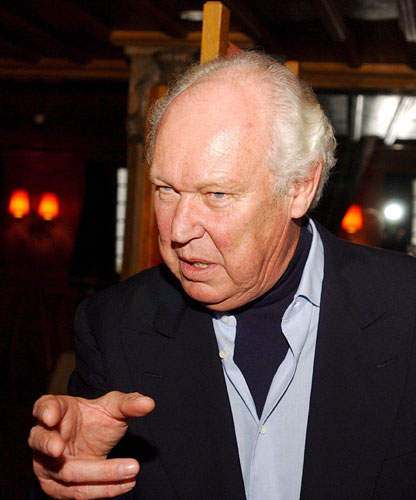
arrest of Vittorio Emanuele
of Savoy and the whirlwind of shit that, by publishing the eavesdropping graciously provided by the magistrates to newspapers, has accompanied the news, may have led to some Italian, a sigh of relief.
"Thank God there is no longer the monarchy, must have thought," otherwise the head of state would be this guy. "
Indeed, Vittorio Emanuele, in addition to the physiognomic features, which is not to inspire much confidence, not particularly distinguished himself in the course of his life, to improve the image of a house, the House of Savoy, which were widely disgraced from his grandfather, King Victor Emmanuel III
.
"The king was good but stupid," Hemingway wrote of Vittorio Emanuele III of the Great War, when Italy was an ally of the United States. I do not know if he changed his mind when the two countries, twenty years later, they found themselves on opposite sides. But maybe not, because judging from the words attributed by Curzio Malaparte in a group of American officers of the allied contingent that went back to the peninsula in the final part of the Second World War, it would seem that the "Little King", as they called him, continued to inspire the American people, feelings of tenderness
"The poor king," he said, "said Major Morris, of Savannah, Georgia," certainly did not expect a welcome like this. Naples has always been a city very devoted to the monarchy. "
"You were in the Via Toledo, now, when King was booed? She asked Jack.
"What King? "I said.
" The King of Italy, "said Jack.
"Ah, the King of Italy."
"I have been singing today in Via Toledo," said Jack.
[...]
"Your poor King," said Colonel Brand, "I feel sorry for him." And he said, smiling kindly: "And for you too."
"Thank a lot for him," I answered.
Curzio Malaparte, Skin , Air Italy, Rome - Milan, 1949
Not so cute were the sentiments of those, fascists and, in many cases, anti-fascists, who believed that Vittorio Emanuele III were nothing more than the "traitor king," the traitor who left the country the "ignoble" September 8, the soldiers sang as the X-Mas.
And there is another song of the times of the Social Republic, which clearly expresses the mood of the moment:
We want to carve a headstone engraved on leather
trojan,
death in the House of Savoy
us we are the Republican fascists.
Death to the King
alive Grazian,
cheers beam
Republicans!
"We want to carve a headstone," in hymns and songs of the Republic Italian Social
However, shortly afterwards, the king abdicated in favor of his son, Umberto II, and his work of that tragic day is still under discussion: a Galli della Loggia, who speaks of "death of the Nation "about September 8, a
Ciampi's claim that the escape of the king assured" continuity of the institutions taking refuge in a territory free from the German presence. "
Umberto II is not much to say except that when he acted nobly, to avoid further tragedies to the Italian people, he decided to accept the outcome of the referendum on the monarchy even though he knew it was fake, and that seems to nourish a lot estimate against his son Vittorio Emanuele.
of which is known to have interest in firearms, both as a hobby as a business.
It is said that in the '50s, during a cruise along the Turkish coast is amused to shoot from the boat, against grazing animals, while, years later, in the '70s, he was investigated for international traffic in arms . But the most tragic moment was in 1978 when, drunk, fired several gunshots from his boat, one of which fatally wounded Dirk Hamer (son of the famous
Ryke Geerd Hamer ), who was asleep in a boat nearby.
His other great passion, money-making and whoring were raised, as noted, the interest of the power of magistrate Henry John Woodcock. Which Woodcock, consistent with his memorable statement:
We who live in Court because we are lucky men, without paying the ticket, we have a front row seat in the theater of life.
" Henry John Woodcock, in Wikipedia
had fun for months to listen to telephone conversations of Vittorio Emanuele. By paying the ticket to the Italian taxpayer. Then he ordered the arrest of the prince for criminal conspiracy and pimping.
From reading the transcripts of wiretaps telephone are obtained two impressions: that this inquiry, like others of Woodcock, most likely will be resolved in a bubble, and that Vittorio Emanuele is not what is known as a man of sound moral principles.
It seems rather to be a pimp trafficone and a large (and I do not know why, but it makes me nice feature).
So, we should rejoice that in Italy there is no longer the monarchy? The fact that a king might be morally questionable automatically brings discredit to the monarchical institution? I do not know, but it seems interesting and fascinating, though a little outdated, what he wrote about the Alexandre Dumas:
[...] builds a king only when he is next to God or God's spirit will always know [...] distinguish the king from the monarchy. The king is just a man, the monarchy is the spirit of God When you are in doubt about who you serve, apparently abandoned the principle material for the invisible. Why all the principle is invisible. Only, God wanted to make tangible embodying this principle in a man. [...] If [the] king is a tyrant, because the Almighty has in itself a vertigo that leads to tyranny, served, loved and respected the monarchy, that is it infallible, that is the spirit of God on earth, that is, the spark from heaven for which the human dust becomes so great and so holy that the rest of us gentlemen, even of high lineage, we are so few things, before this body lying on the bottom step of this scale [the body of Louis XIII of France, ed], as this same body before the throne of the Lord.
Alexandre Dumas, Twenty years later, Gherardo Casini Editore, 1956
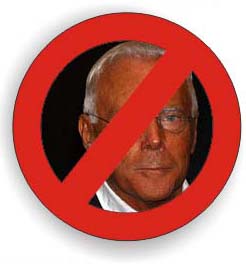 this Bella! Letizia Moratti met the "people of fashion" at Palazzo Marino parades to celebrate the conclusion of "Milano Moda Uomo Giorgio Armani and complains of the" center deserted after a certain time. "